TL;DR A distortion-free, sampling-based watermarking method for generative models that requires only black-box access to any generator and any semantic encoder.
Generation
1
Sample N independent generations from the generator
2
Embed each image with a semantic encoder
3
Divide the semantic space into 2M regions using LSH (semantic codes)
4
Score each region with a secret key
5
Return one image from an appropriate distribution
Sample a region depending on the group sizes and the secret key, to preserve the original output distribution, then release one of its images unchanged.
Detection
1
Take an image
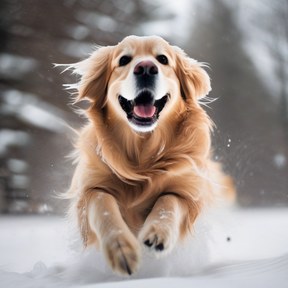
Here, a watermarked image and one that is not, side by side.
2
Embed it and find its semantic region
3
Score its region with the same secret key and compare it to a threshold
Watermarked images are much more likely to score high. A non-watermarked image's score is uniform between 0 and 1.
An example with the prompt, model and hyperplanes from Generation.
About the method
Semantic robustness
original→cropped
Cropping, resizing, and compression change pixels but not what an image depicts. The encoder is trained to describe an image and its edited versions alike, so edited images stay in the same semantic region and keep the watermark.
Distortion-free
generator=with watermark
For any prompt, averaging over random secret keys gives exactly the same distribution of images as sampling the generator directly.
Black-box
generatorencoder
The method only requests samples and encodes them, so it works with a closed generation API. To our knowledge it is the first distortion-free semantic watermark that treats both the generator and the encoder as black boxes.
Citation
@misc{yossef2026distortionfree,
  title         = {Distortion-Free Semantic Watermarks for Black-Box Generative Models},
  author        = {Yossef, Aviv and Patashnik, Or and Zamir, Or},
  year          = {2026},
  eprint        = {2611.23208},
  archivePrefix = {arXiv},
  primaryClass  = {cs.LG},
  url           = {https://arxiv.org/abs/2611.23208}
}